
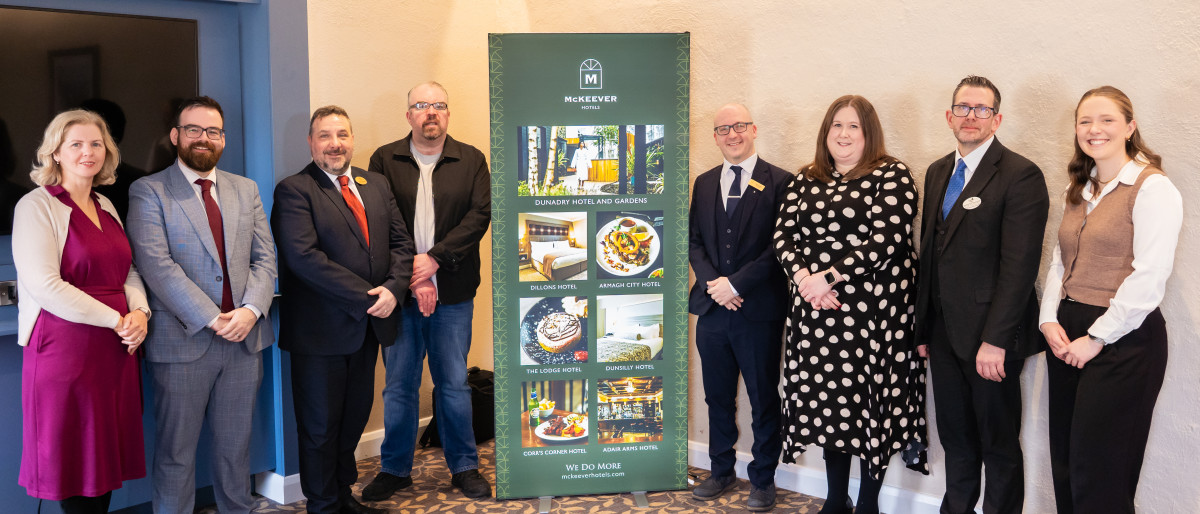
Building workforce planning capability at McKeever Hotels with Six Steps
In a sector facing persistent recruitment challenges, changing workforce expectations and rising cost pressures, aligning workforce decisions with business performance is becoming essential to sustaining both service quality and financial performance across hospitality and tourism.
Recognising the need for a more connected, organisation-wide approach to workforce planning, McKeever Hotels, a family-run group operating seven hotels across Northern Ireland and the Republic of Ireland, engaged with the Six Steps to Strategic Workforce Planning programme to strengthen capability across the business.
The Six Steps programme
Based on the Six Steps Methodology to Integrated Workforce Planning, the programme brings together HR and operational leaders from different businesses to build in-house workforce planning capability through a structured process of understanding business demand, defining required roles and skills, assessing current workforce capability and developing targeted actions.
Delivered over a series of weeks in short, focused modules, the programme provided participants with structured workbooks and practical tools to apply and embed their learning between sessions, culminating in a tailored workforce plan for their division or site.
McKeever Hotels carefully selected a cross-functional group of HR and operational leaders from across the business, including heads of department and operational managers across their front of house, kitchen and housekeeping divisions, ensuring workforce planning was viewed through both a strategic and operational lens, creating the foundation for more informed, evidence-based workforce decisions.
From data visibility to deeper insight
The business was not short of workforce data. Duty managers, heads of department and general managers already had access to key metrics – wage percentages, weekly hours against sales and performance data. These measures were embedded in operational oversight and informed day-to-day decisions.
However, there was less visibility on how those measures connected, or how they could be used collectively to shape longer-term workforce decisions.
Through the Six Steps to Strategic Workforce Planning programme, managers began to interpret the data differently. By linking business demand with workforce availability, managers gained greater clarity on how wage spend, recruitment patterns and operational performance interact, and confidence in working with and interpreting workforce data increased.
From reactive replacement to workforce design
Conversations about recruitment patterns and workforce demographic profile began to shift.
As leaders worked through the Six Steps Methodology, they started to look more closely at how recruitment decisions influence cost and performance, and what their workforce profile signalled about future risk, and how local labour market and demographic trends could impact future talent supply.
Instead of defaulting to like-for-like replacement, managers began considering whether roles needed to evolve, whether internal progression was possible, and how decisions made now would strengthen capability over time.
This gave participants the knowledge to move beyond filling vacancies and towards deliberately designing a workforce better aligned to business needs – with positive implications for retention, internal mobility, employee motivation and organisational resilience.
Broadening ownership beyond HR
Engaging with the Six Steps to Strategic Workforce Planning programme has started to change how workforce planning is perceived internally.
While workforce data had always been available, the structured framework clarified ownership and accountability. Workforce planning is becoming less of an HR-led process and more of a shared responsibility across HR, finance and operational leadership.
Bringing these perspectives together is also strengthening dialogue across the business. Operational leaders developed a clearer understanding of how workforce decisions connect across departments, while HR gained deeper insight into operational pressures and performance drivers.
There were practical benefits too. Managers felt more confident interpreting their own data and making informed decisions, reducing reliance on central HR for routine queries.
“The biggest impact of the Six Steps Strategic Workforce Planning Programme was moving workforce planning beyond HR and into the wider business. It gave our managers the tools and confidence to connect workforce data to operational performance and apply it in everyday decisions. They’re now thinking differently about recruitment and workforce design, focusing on internal progression and building long-term capability. That shift is critical for retention, mobility and resilience, and I would strongly encourage other organisations to engage with the programme.” – Kristine Graham, Group HR Manager, McKeever Hotels
Discover more

Related News

UK Resilience Academy to Expand National Occupational Standards for Resilience and Emergencies

From reactive recruitment to strategic workforce planning

From insight to habit: building bias management capability that lasts